
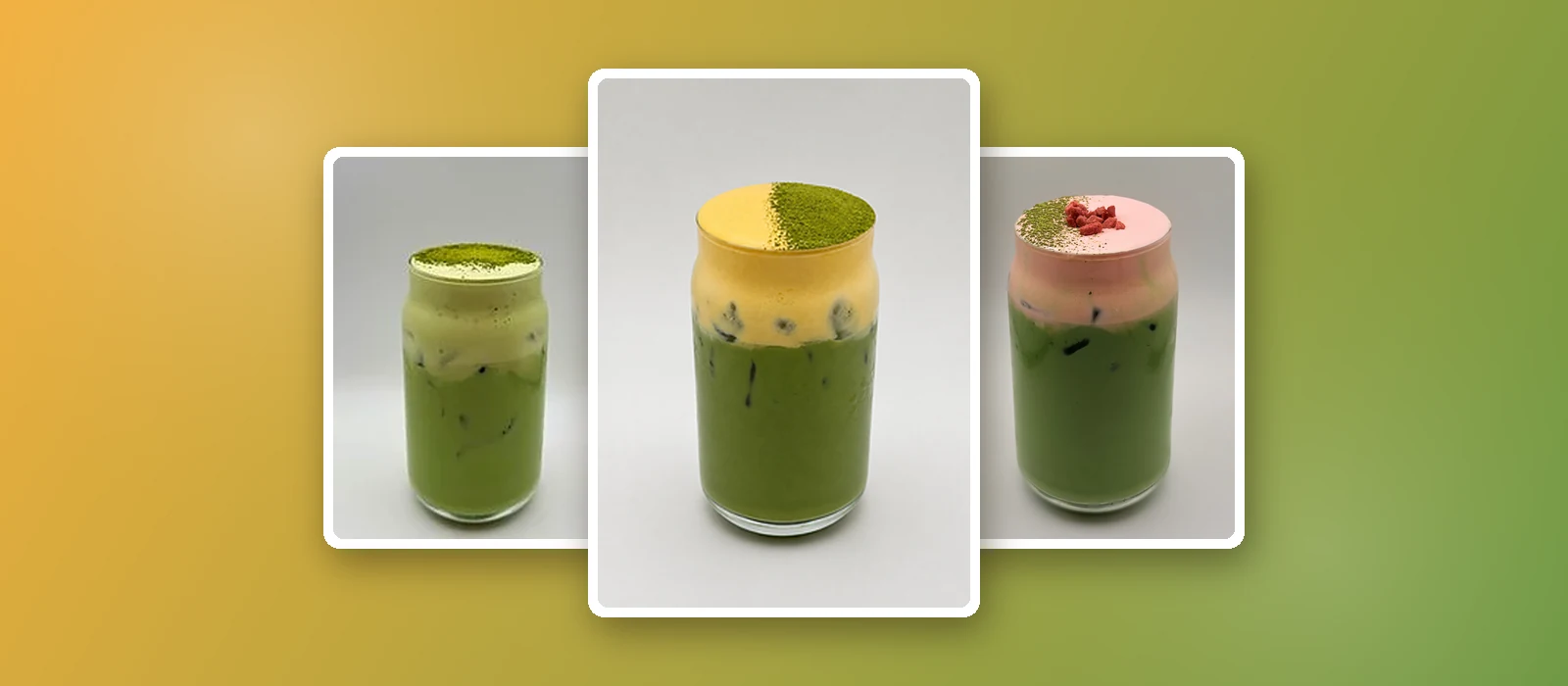
Mango Matcha Nimbus
$7.95 · iced
Quick answer
Mango matcha is an iced matcha latte paired with sweet mango purée, so you get tropical fruit first and grassy green tea after. Near Union Square, Origin Lab makes it as the Mango Matcha Nimbus ($7.95): real mango purée layered over ceremonial-grade matcha with milk, at 211 Sutter St.
Mango matcha is one of the fastest-growing matcha drinks right now, and it is easy to see why. Ripe mango is sweet and juicy, matcha is grassy and a little bitter, and together they balance each other out. This guide covers what mango matcha is, what it tastes like, how we build ours, how to make one at home and where to try it in San Francisco.
+114%
rise in popularity of the mango matcha latte in a year
Spate trend data, reported by FoodNavigator, Sept 2026
What Is Mango Matcha?
Mango matcha is a matcha latte paired with mango, almost always served iced. Some cafes put the mango purée at the bottom of the glass and pour milk and matcha over it. Others put the fruit on top. Either way, the idea is the same: a sweet, fruity layer next to a green tea layer that you can sip separately or stir together.
It belongs to a bigger wave of fruit-and-matcha drinks. Market research firm Spate, which tracks searches and social media, found interest in the mango matcha latte up 114.4% year over year, compared with 26.6% for strawberry matcha, and credits the mix of tropical, sweet and herbal flavors (FoodNavigator). If you like the strawberry version, our guide to strawberry matcha in San Francisco covers that one.
Why Mango and Matcha Work Together
Good pairings balance each other, and these two do. Matcha brings a savory, grassy taste and a gentle bitterness. Mango brings sugar, a little acidity and a soft, almost creamy texture. The fruit takes the edge off the bitterness, and the tea keeps the fruit from tasting like candy.
Color helps too. Bright orange next to deep green looks good in a clear glass, which helps explain why it shows up in so many photos. The milk in between rounds everything out, so the drink tastes closer to a mango lassi with green tea than to a juice.
The Mango Matcha Nimbus, Layer by Layer
At Origin Lab, our version is called the Mango Matcha Nimbus. Here is what is in the glass, from the top down:
Matcha dusting
A sprinkle of matcha powder over half of the top. Taste: A first hint of green tea.
Mango layer
A thick, bright orange layer made with real mango purée. Taste: Sweet, juicy, a little tangy.
Matcha latte
Ceremonial-grade matcha with milk, no added sweetener. Taste: Grassy, savory, a soft bitterness.
Ice
The drink is made iced. Taste: Keeps the two layers apart until you stir.
We put the mango on top instead of at the bottom, so your first sip is fruit and the tea follows. The matcha underneath has no added sweetener, which keeps the drink from tasting like dessert. "Nimbus" is our name for drinks finished with a flavored layer, such as strawberry, ube, mango or pumpkin, and our menu explained guide decodes every name on the board.
What Does Mango Matcha Taste Like?
Sip it without stirring and you get two drinks in one: sweet, juicy mango first, then cool, grassy matcha with milk. Stir it and the flavors blend into something like a mango smoothie with a green tea finish. Here is how we would describe ours:
Our tasting notes, out of 5
If you are new to matcha, this is one of the easiest ways in, because the fruit softens the green tea taste. If you already love matcha, you will still taste the tea, since our matcha drinks are made with ceremonial-grade matcha. Our new guide to ceremonial grade matcha explains what that label means.
Mango vs Strawberry vs Ube Matcha: Which to Order
All three of our fruit-and-matcha drinks cost $7.95, so pick by taste:
If you like tropical and juicy
Mango Matcha Nimbus $7.95
Bright, sweet and a little tangy. Best on a sunny afternoon.
If you like berries and cream
Matcha Strawberry Nimbus $7.95
Fruity and tart under a pink strawberry cloud. A good first matcha.
If you like nutty and mellow
Ube Matcha Nimbus $7.95
A purple ube cloud, creamy and gently sweet. Here is what ube matcha is.
If you like just the tea
Pure Matcha Lab $7.75
Iced ceremonial-grade matcha with your choice of milk, nothing on top.
Want foam instead of fruit? Our matcha cloud drinks are finished with a layer of whipped matcha foam. Here is what a matcha cloud is and how it differs.
A Few Facts About Mango
Mangoes come from the region between northwestern Myanmar, Bangladesh and northeastern India, and they are the national fruit of India, Pakistan and the Philippines. India grows more than any other country, about 43% of the world's mangoes in 2023 (Mango). In the United States, the National Mango Board says mangoes are in season all year, because different varieties peak at different times (National Mango Board):
| Variety | Peak availability in the U.S. | Good for mango matcha? |
|---|---|---|
| Honey (Ataulfo) | Late February to mid-July | Yes. Very sweet, smooth, almost no fiber |
| Haden | March, April and early May | Good, a bit more fiber |
| Tommy Atkins | Early March to mid-July | Fine if very ripe; firmer and more fibrous |
| Keitt | August to September | Yes. Sweet and smooth, stays green when ripe |
| Kent | January to early February, and again in December | Yes. Juicy and sweet, low fiber |
How to Make Mango Matcha at Home
You do not need special equipment beyond a blender and a whisk or milk frother. This makes one tall glass:
Recipe card: one iced mango matcha latte
120 g
ripe mango
about 3/4 cup, cubed
2 g
matcha
about 1 level teaspoon
60 ml
hot water
about 80°C / 176°F
180 ml
cold milk
dairy or plant milk
- Blend the mango with a splash of the milk until smooth. Taste it: a very ripe mango needs no sugar, a firm one may need a teaspoon of honey.
- Sift the matcha into a bowl, add the hot water and whisk for about 15 seconds until there are no lumps and a light foam forms.
- Spoon the mango purée into a tall glass and fill it with ice.
- Pour in the cold milk slowly, then pour the matcha over the top so it settles in a green layer.
- Stir before you drink, or sip it in layers.
Matcha amount and water temperature follow Ippodo Tea's usucha guide. This is a home version, not the recipe we use in the cafe.
Two tips make the biggest difference. First, use a fully ripe mango: it should smell sweet at the stem and give a little when you press it. Second, keep the water for the matcha below boiling. Water straight off the boil makes matcha taste harsh, and that bitterness will fight the mango instead of balancing it.
Sweetness, Dairy and Caffeine
A few things people ask before ordering:
- Sweetness: the matcha base has no added sweetener, so the sweetness comes from the mango. Sweetener is free on matcha drinks if you want more.
- Milk: the matcha base is made with milk. Oat, almond, soy or coconut milk adds $0.75. If you avoid dairy completely, ask the barista about the mango layer when you order.
- Caffeine: the matcha has caffeine; the mango does not. A drink made with 2 g of matcha has roughly 38 to 88 mg, based on Healthline's figure of 19 to 44 mg per gram.
Where to Get Mango Matcha Near Union Square
Origin Lab Coffee & Matcha is at 211 Sutter St, on the corner of Sutter and Kearny, about a 6-minute walk from Union Square and a 4-minute walk from Montgomery Street station. The Mango Matcha Nimbus is on our regular menu, and you can order it ahead online for pickup. For the full matcha menu, see our guide to matcha near Union Square.
Visit Origin Lab
Mango Matcha Nimbus, $7.95, at 211 Sutter St
Near Union Square, San Francisco. Open Sunday to Thursday 6 AM to 8 PM, Friday and Saturday 6 AM to 9 PM. Order ahead for pickup, or come in and watch it being made.
Frequently Asked Questions
What is mango matcha?
Mango matcha is a matcha latte paired with mango purée, usually served iced. The fruit adds sweetness and a juicy, tropical flavor, and the matcha adds a grassy, slightly bitter green tea taste. Most versions keep the two in separate layers until you stir.
What does mango matcha taste like?
The first sip is sweet and fruity from the mango, then the matcha comes through with a fresh, grassy and savory taste. Stirred together, it tastes like a creamy mango smoothie with a green tea finish. It is sweeter and softer than a plain matcha latte.
Where can I get mango matcha in San Francisco?
Origin Lab Coffee & Matcha at 211 Sutter St, about a 6-minute walk from Union Square, makes the Mango Matcha Nimbus for $7.95. You can order it at the counter or online for pickup. We are open from 6 AM every day.
How much is the Mango Matcha Nimbus?
The Mango Matcha Nimbus is $7.95, the same as our strawberry and ube matcha drinks. Oat, almond, soy or coconut milk in the matcha base adds $0.75. Sweetener is free on matcha drinks, although most people find the mango sweet enough.
Does mango matcha have caffeine?
Yes, from the matcha. Healthline puts matcha at about 19 to 44 mg of caffeine per gram of powder, so a drink made with 2 grams has roughly 38 to 88 mg. The mango itself has no caffeine. That is usually less than a cup of drip coffee.
Is mango matcha sweet?
Sweeter than a plain matcha latte, mostly because of the mango. At Origin Lab the matcha base has no added sweetener, so the sweetness comes from the fruit layer. If you want it sweeter, ask for sweetener, which is free on matcha drinks.
Can I get the Mango Matcha Nimbus dairy-free?
The matcha base can be made with oat, almond, soy or coconut milk for $0.75 more. If you avoid dairy completely, ask the barista about the mango layer when you order, so we can tell you exactly what goes into it that day.
Can I get mango matcha hot?
The Mango Matcha Nimbus is made iced, because the cold keeps the mango and matcha layers apart. For something warm, the Hot Matcha Latte is $6.50. You can also try the hot hojicha latte, a roasted green tea with a nutty, toasty taste.
How do you make mango matcha at home?
Blend ripe mango into a purée, spoon it into a glass with ice, then add cold milk. Whisk about 2 grams of matcha with 60 ml of water at 80 degrees Celsius and pour it on top. Stir before drinking. A ripe mango usually needs no added sugar.
What is the best mango for mango matcha?
A ripe, sweet mango with little fiber works best, such as a Honey mango, also sold as Ataulfo. It blends into a smooth purée with no stringy bits. Kent and Keitt mangoes are good too. Pick one that gives slightly when pressed and smells sweet.