
ON THE LABEL
Ceremonial
Grade
MATCHA · PRODUCT OF JAPAN
Not an official grade
Quick answer
Ceremonial grade matcha is a seller’s label for its smoothest, brightest drinking matcha, usually stone-ground from young, shade-grown spring leaves. It is not an official grade in Japan or a regulated term in the U.S., so judge the tea by its color, aroma and taste.
Walk down any tea aisle and you will see "ceremonial grade" on cheap tins and expensive ones alike. The words sound official, so most people assume they mean something specific. They do not, at least not in the way "USDA Prime" does for beef. This guide explains what the label usually points to, where it came from, how ceremonial matcha differs from culinary matcha, and how to judge a tin yourself before you pay for it.
What Does Ceremonial Grade Matcha Mean?
In practice, "ceremonial grade" is a seller's name for the matcha it thinks is good enough to drink with nothing but hot water. That usually means tea leaves from the first spring harvest that were shaded before picking, then steamed, dried and slowly ground on a stone mill into a fine, bright green powder. Shading raises the chlorophyll in the leaf, which gives the color, and slows the change of the sweet amino acid L-theanine into bitter compounds, which gives the smooth, savory taste called umami (Matcha).
What the label does not tell you is who decided. There is no official U.S. standard behind the term, so it is not regulated, and Food Network's matcha guide notes that you cannot assume it guarantees high quality (Food Network). Two tins can both say "ceremonial" and taste completely different.
Is Ceremonial Grade an Official Japanese Grade?
No. Ippodo, a Kyoto tea house founded in 1717, says plainly that it does not use the term: it calls "ceremonial grade" vague, says it was invented to market matcha to the West, and notes that it is not used in Japan (Ippodo Tea). Japanese tea shops more often describe a matcha by how it is meant to be prepared:
- Usucha (thin tea): about 2 g of matcha whisked with hot water into a light foam. This is the everyday bowl most people mean when they say "matcha."
- Koicha (thick tea): about 4 g of matcha with 30 ml of water, kneaded into a thick, glossy paste (Matcha). Only the smoothest, least bitter matcha works here, so a tin labeled "for koicha" is a stronger signal than "ceremonial."
So when you see "ceremonial grade," read it as "the brand's drinking matcha." Then check the tea itself. If you are new to matcha and want the basics first, start with our guide to what matcha is and how it is made.
Ceremonial vs Culinary vs Latte Grade Matcha
Because brands set their own grades, the lines below are typical, not fixed rules. Still, most sellers split their matcha roughly like this:
| Ceremonial | Latte grade | Culinary | |
|---|---|---|---|
| Leaves | Young leaves from the first spring harvest, shaded | First or second harvest, often blended | Later summer or fall harvests, larger leaves |
| Color | Vivid, bright green | Green, slightly less bright | Duller, olive or yellow-green |
| Taste | Smooth, sweet, savory, light bitterness | Balanced, a bit stronger | Bold and bitter on its own |
| Best for | Drinking with water (usucha) | Lattes and iced drinks with milk | Baking, smoothies, cooking |
| Price | Highest per gram | Middle | Lowest per gram |
The harvest matters most. Tencha, the leaf used for matcha, is picked in spring, and later summer and fall harvests are generally lower in quality (AP via ABC7). That is why the same farm can sell an expensive ceremonial tin and a much cheaper culinary bag.
How Matcha Is Made, From Shade to Stone Mill
STEP 1
Shade the plants
Tea bushes are covered for about 2 to 3 weeks before harvest, which deepens the green and builds L-theanine.
STEP 2
Pick in spring
The first harvest gives the youngest, most tender leaves, the ones used for the best matcha.
STEP 3
Steam and dry
Steaming stops the leaves from oxidizing, so they stay green. The dried leaf is called tencha.
STEP 4
Remove stems and veins
The tough parts are taken out, leaving only the soft leaf flesh.
STEP 5
Grind on stone
Stone mills turn slowly in cool rooms so the tea does not heat up. It is slow work for a small amount of powder.
Cheaper "matcha" made by crushing leaves that were never shaded does not meet the definition of matcha at all (Matcha). Japan's best-known growing areas include Uji near Kyoto, Nishio in Aichi and Shizuoka.
How to Tell Good Matcha: A 5-Point Test
You do not need a tea master to judge a tin. Open it, look, smell and taste. These checks work on any matcha, whatever the label says:
Color and aroma are the two quickest clues. Food Network's guide puts a bright green color and a rich smell at the top of its list, and notes that some bitterness is normal in good matcha (Food Network). If you would rather taste a few before buying, our guide to the best matcha in San Francisco covers what to look for in a cafe.
Why Matcha Costs More Than It Used To
If ceremonial tins seem pricier this year, you are not imagining it. Matcha demand has grown much faster than supply:
Japan's green tea exports reached 13,125 tons in fiscal 2025, up 42% from the year before, and their value rose 2.2 times to 84.7 billion yen. About 70% of that volume was powdered tea, mostly matcha (Jiji Press). Meanwhile, poor weather cut into recent harvests (AP via ABC7). Since only spring leaves make the best matcha, the top grades are the first to run short. Some well-known Kyoto sellers, including Ippodo, limited sales in late 2024 as demand outran supply (Matcha).
For buyers, the takeaway is simple: a very cheap tin labeled "ceremonial" deserves a closer look at the color and the origin.
Do You Need Ceremonial Grade for a Latte?
Usually not. Milk rounds off bitterness and covers some of the delicate sweetness that you pay for in a top tin, so a solid everyday matcha makes a very good latte. Where ceremonial matcha earns its price is in a plain bowl with water, where there is nothing to hide behind.
That said, better matcha still shows in a milk drink. It stays green instead of turning khaki, and you can taste the tea through the milk instead of just sweetness. That is why our matcha drinks at Origin Lab are made with ceremonial-grade matcha, iced ones included. They come unsweetened unless you ask, so you taste the tea first. If matcha tastes too grassy for you, its roasted cousin might suit you better. Our hojicha vs matcha guide compares the two.
How to Make Ceremonial Matcha at Home
Recipe card: one bowl of usucha (thin matcha)
2 g
matcha
about 1 level teaspoon, sifted
60 ml
water
2 oz
80°C
176°F
boil, then cool for a minute or two
15 s
whisking
quick zigzag, like an M
- Sift 2 g of matcha into a bowl. Sifting breaks up the small clumps that make a cup gritty.
- Pour in 60 ml of water at about 80°C (176°F). Boiling water straight from the kettle makes matcha taste harsher.
- Whisk briskly for about 15 seconds in a zigzag, keeping the whisk just off the bottom of the bowl, until a fine foam covers the top.
- Drink it right away, before the powder settles.
Amounts from Ippodo Tea's usucha guide.
You need four simple tools: a wide bowl, a bamboo whisk (chasen), a scoop (chashaku) and a small sieve. A fork or milk frother works in a pinch, but a bamboo whisk gives the fine foam that makes thin matcha taste smooth. If you are putting a kit together, or buying one for someone, our matcha gift guide lists what we sell, including our Matcha Set ($49.99), which comes with a bowl, a spoon and a whisk holder, and the whisk itself ($14.99), which is sold separately.
How to Store Matcha So It Stays Green
Matcha is a ground leaf, so it has a lot of surface area and loses freshness fast once air gets in. Ippodo recommends drinking it within about a month of opening, keeping it sealed in its inner bag or an airtight tin, and storing it away from sunlight, heat and strong smells like coffee or spices (Ippodo). Buy small tins you will finish, and check the best-by date before you buy.
Try Ceremonial-Grade Matcha Near Union Square
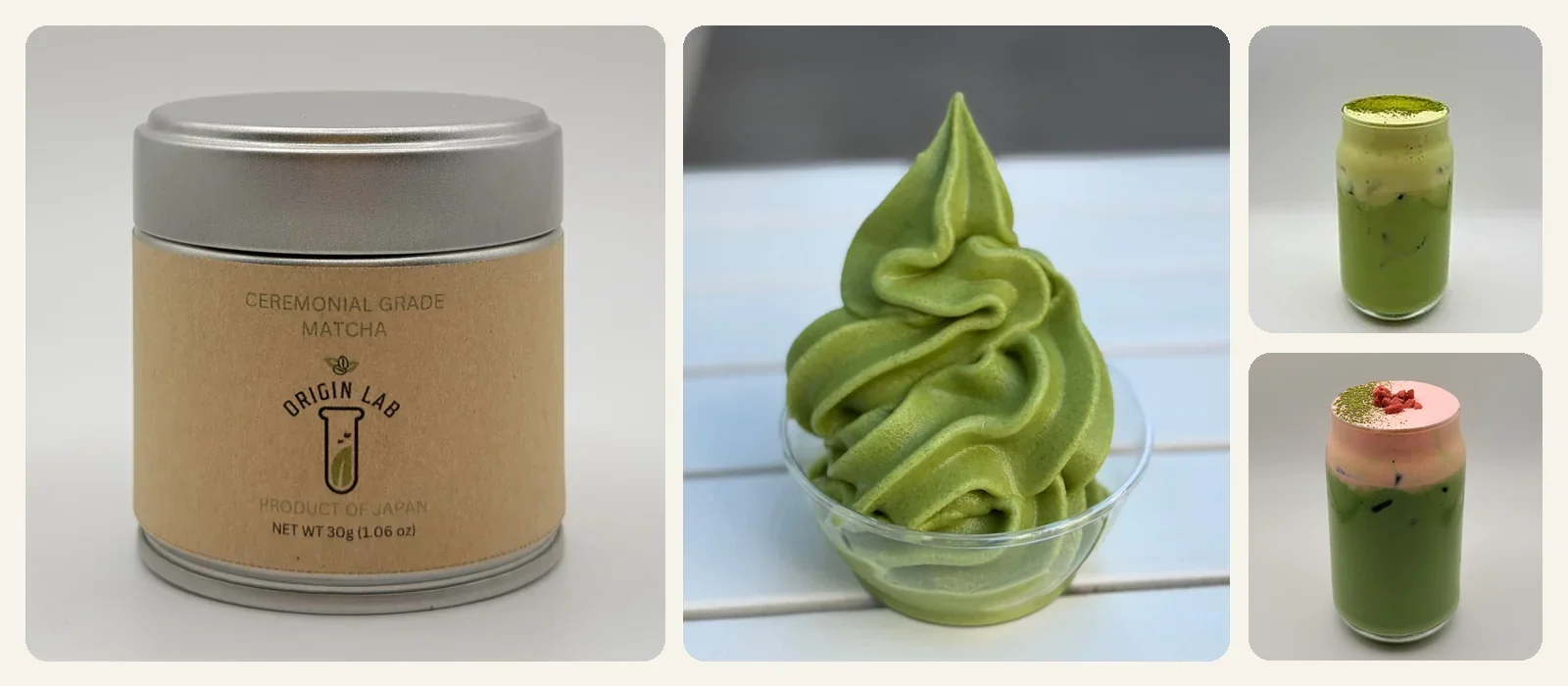
At Origin Lab Coffee & Matcha, our matcha drinks are made with ceremonial-grade matcha. A few good places to start, depending on how you like it:
The simplest way to taste the tea with milk. Good on a cool San Francisco morning.
Iced matcha with your choice of milk. Oat, almond, soy or coconut milk adds $0.75.
Iced matcha under a layer of matcha foam. Here is what a matcha cloud is.
Not a drink, but the easiest way to try matcha as a dessert. More in our matcha ice cream guide.
Want to make it at home? Our own Origin Lab Ceremonial Grade Matcha, a product of Japan, comes in a 30 g tin on our retail shelf. Ask at the counter for the price. For the full list of matcha drinks, hours and how to find us, see our guide to matcha near Union Square.
Visit Origin Lab
Taste the difference at 211 Sutter St
Near Union Square, San Francisco. Open Sunday to Thursday 6 AM to 8 PM, Friday and Saturday 6 AM to 9 PM. Our matcha drinks come unsweetened unless you ask, and sweetener is free on matcha.
Frequently Asked Questions
What does ceremonial grade matcha mean?
It is a marketing label for a brand's best drinking matcha, usually made from young, shade-grown spring leaves that are stone-ground into a bright green, smooth powder. It suggests the tea tastes good with water alone, but no official body checks the claim.
Is ceremonial grade an official grade in Japan?
No. Japan has no national system that sorts matcha into ceremonial and culinary grades, and Ippodo, a Kyoto tea house founded in 1717, says the term is not used in Japan. Japanese sellers more often describe a matcha as suited to usucha or koicha.
What is the difference between ceremonial and culinary matcha?
Ceremonial matcha is meant for drinking with just water, so it is usually brighter, smoother and sweeter. Culinary matcha is made for baking and cooking, often from later harvests, so it is more bitter, less vivid in color and much cheaper per gram.
Is ceremonial grade matcha worth it for lattes?
Often you do not need the top tin for a latte, because milk softens bitterness and hides some of the fine flavor. A good matcha that tastes clean on its own is enough. Save your most expensive matcha for drinking with water.
How can you tell if matcha is high quality?
Look for a vivid green color, a fresh, grassy and slightly sweet smell, a powder as fine as talc, and a taste that is smooth rather than harsh. Check the label for the country of origin and a best-by date, and avoid added sugar or milk powder.
How much ceremonial matcha should I use per cup?
For a classic bowl of thin matcha, or usucha, use about 2 grams, roughly one level teaspoon, with 60 ml of water. For thick koicha, the traditional amount is about 4 grams with 30 ml of water, and it is kneaded rather than whisked into foam.
What water temperature is best for matcha?
Use water around 80 degrees Celsius, or 176 degrees Fahrenheit. Boiling water brings out bitterness and dulls the sweet, savory notes. An easy way to get there without a thermometer is to boil the kettle and let the water rest for a minute or two.
How long does matcha last after opening?
Matcha does not spoil quickly, but it starts losing color and aroma once the seal is broken. Ippodo recommends drinking it within about a month of opening. Keep it airtight, away from light, heat and strong smells like coffee or spices.
How much caffeine is in ceremonial matcha?
Healthline puts matcha at about 19 to 44 mg of caffeine per gram of powder, so a 2-gram bowl has roughly 38 to 88 mg. That is usually less than a cup of drip coffee, and the tea’s L-theanine tends to make the lift feel calmer.
Where can you buy ceremonial grade matcha in San Francisco?
At Origin Lab Coffee & Matcha, 211 Sutter St near Union Square, our matcha drinks use ceremonial-grade matcha, and our own Origin Lab Ceremonial Grade Matcha, a product of Japan, sits on the retail shelf in 30 g tins. Ask at the counter for the price.