
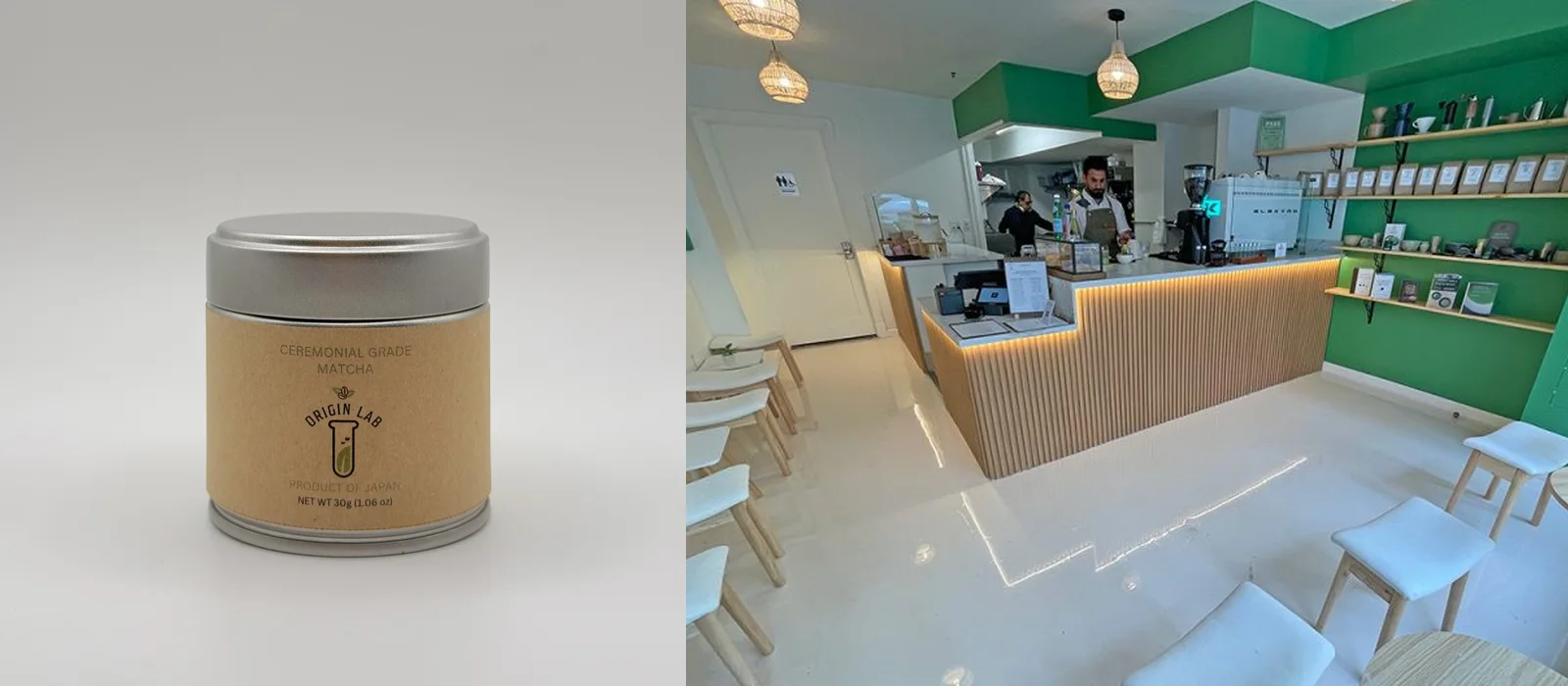
Matcha ice cream is one of those desserts people go looking for by name. Somebody had it in Kyoto or at a Japanese restaurant, and now they want it again, close by, today. If you are near Union Square, that is easy: we serve matcha soft serve at our counter on Sutter Street.
This guide covers what to expect from it, how soft serve differs from scooped ice cream, how much caffeine is in a matcha dessert, a short history of the flavor and what to order with it.
Matcha Soft Serve at Origin Lab
Our Matcha Soft Serve is $7.95 and is on the menu every day, from our 6 AM opening until close. Next to it sits a plain Vanilla Ice Cream for $5.50, which is handy when you are with someone who does not want caffeine or does not like the taste of green tea.
We are a matcha shop first. Our matcha drinks use our own ceremonial-grade matcha from Japan, and the soft serve brings green tea into a different form: cold, creamy and eaten with a spoon. If you are new to the tea itself, our guide What Is Matcha? explains how it is grown and ground.
Matcha Ice Cream vs Matcha Soft Serve: What Is the Difference?
People search for both, and they are close relatives. The difference is in how the dessert is made and served, not in the tea.
Matcha soft serve
- Made fresh in a machine and served straight from it
- Pulled at about −4°C (25°F), so it is soft and smooth
- More air whipped in, often about a third of its volume
- The tea flavor comes through quickly because it is less cold
- In Japan, green tea is one of the classic soft serve flavors
Scooped matcha ice cream
- Frozen hard and stored at about −15°C (5°F)
- Denser, with less air
- Usually richer, with more milk fat
- Takes a moment to warm up and release its flavor
- Sold in tubs and by the scoop in many US shops
Those temperatures and air levels come from the standard description of soft serve: the ideal air content is roughly 33 to 45 percent of the volume, which keeps it light without washing out the taste. For matcha, that matters. Green tea is a delicate flavor, and a warmer, airier dessert lets you taste it sooner.
What Does Matcha Ice Cream Taste Like?
Here is what to expect, spoonful by spoonful:
First taste
Sweet cream and milk. The cold mutes the tea for a second.
As it melts
The savory, grassy taste of green tea comes forward, a little like fresh spinach and sweet hay.
The finish
A soft, pleasant bitterness that keeps it from tasting like plain sugar.
How to Tell Good Matcha Ice Cream
Whether you are at a counter or reading a carton in the freezer aisle, four quick checks help:
If you like the flavor but want something toastier, try hojicha, the roasted Japanese green tea. Our hojicha vs matcha guide explains how the two taste side by side.
Does Matcha Soft Serve Have Caffeine?
Yes, a little. Matcha is a whole-leaf green tea, so anything made with it carries some caffeine. Matcha powder has roughly 20 to 45 mg of caffeine per gram, and a typical 8-ounce cup of matcha tea has about 60 to 70 mg, compared with 95 to 165 mg in the same amount of brewed coffee (Chowhound).
Brewed coffee, 8 ozabout 95 to 165 mg
Matcha tea, 8 ozabout 60 to 70 mg
Regular green tea, 8 ozabout 35 mg
Matcha soft serve, one servinga small amount; depends on the recipe
Vanilla Ice Creamnone
The bars compare the top of each range. The soft serve bar is dashed because no fixed number exists: it depends on how much matcha is in the mix.
A serving of soft serve holds far less powder than a cup of tea, so it usually has less caffeine than a matcha drink. It is still not caffeine-free. For kids, for anyone who avoids caffeine, or for a late dessert at 8 PM, choose the Vanilla Ice Cream.
A Short History of Matcha Ice Cream
Matcha in frozen desserts is much older than most people think. A few moments from the story, from the Wikipedia history of green tea ice cream:
What to Order With Matcha Soft Serve
A spoonful of cold, sweet green tea goes well with something warm or something bitter. Three combinations worth trying:
With a Hot Hojicha Latte
Roasted, nutty and warm against cold and grassy. Take a bite, then a sip. It is the easiest way to taste two Japanese teas at once.
Together: $15.45
With an espresso on the side
Spoon a little espresso over the soft serve, a few drops at a time. The bitter coffee makes the green tea taste sweeter.
Together: $12.95
Vanilla for the kids
One Matcha Soft Serve for you and a Vanilla Ice Cream for anyone who wants no caffeine. Easy for families after a walk around Union Square.
Together: $13.45
Want more matcha after that? Our guide to matcha near Union Square lists every matcha drink we make, from a plain latte to the layered fruit drinks. For other sweet stops, see dessert near Union Square.
Matcha Ice Cream Weather in San Francisco
San Francisco rarely gets hot, and its warmest weather usually comes in September and October rather than in midsummer, when fog cools the city down (Climate of San Francisco). Soft serve is on our menu all year, though, and plenty of people eat it in a jacket.
In winter it fits nicely into a day downtown. Skate at the Union Square rink, walk past the holiday windows, then come in for soft serve and a hot drink. Our Union Square holiday guide has the 2026 dates for the rink, the tree and the windows.
Come in for a cone of green
Origin Lab Coffee & Matcha
211 Sutter St (corner of Kearny), San Francisco, CA 94108
Sun to Thu 6 AM to 8 PM · Fri and Sat 6 AM to 9 PM · open on holidays · (415) 660-7969
Getting Here
- From the Union Square plaza: walk east on Sutter or Post Street to Kearny, about 6 minutes.
- From Montgomery Street station (BART and Muni): take the Kearny Street exit and walk two blocks north, about 4 minutes.
- From Chinatown: the Dragon Gate at Grant Avenue and Bush Street is about 3 minutes away.
Frequently Asked Questions
Where can I get matcha ice cream near Union Square?
Origin Lab Coffee & Matcha at 211 Sutter St, on the corner of Kearny, serves Matcha Soft Serve for $7.95. It is about a 6-minute walk east of the Union Square plaza and opens at 6 AM every day.
Does matcha soft serve have caffeine?
Yes, a little. It is made with matcha, and matcha powder has roughly 20 to 45 mg of caffeine per gram. A serving of soft serve holds far less powder than a cup of matcha tea, so it usually has less caffeine than a matcha drink, but it is not caffeine-free.
Is matcha ice cream the same as green tea ice cream?
Mostly, yes. In the US the two names are used for the same dessert. Strictly, matcha is one kind of green tea: shade-grown leaves ground into a fine powder, which gives the ice cream its bright color and full tea taste.
What does matcha ice cream taste like?
Sweet cream first, then the savory, grassy taste of green tea, with a soft bitter note at the end. Good matcha ice cream tastes like tea, not just like sugar.
What is the difference between matcha ice cream and matcha soft serve?
Soft serve is pulled from the machine at about 25°F, warmer than scooped ice cream, and it has more air whipped in. That makes it lighter and smoother, and the matcha flavor reaches your tongue faster.
How much is the matcha soft serve at Origin Lab?
The Matcha Soft Serve is $7.95, and the Vanilla Ice Cream is $5.50. Prices can change, so the menu at the counter and on our order page has the latest.
Is there ice cream without caffeine at Origin Lab?
Yes. The Vanilla Ice Cream ($5.50) has no tea or coffee in it, so it is the pick for kids and for late evenings.
Is matcha soft serve dairy-free?
Soft serve is usually made from a milk-based mix, so plan on it containing dairy. If you avoid dairy, ask at the counter before you order.
When is the best time for ice cream in San Francisco?
Any time, since soft serve is on our menu year-round. The city's warmest weather usually comes in September and October, but a cone after skating in December is a tradition of its own.
Cold, creamy and properly green: come try the Matcha Soft Serve at 211 Sutter St, from 6 AM every day.