
Quick answer
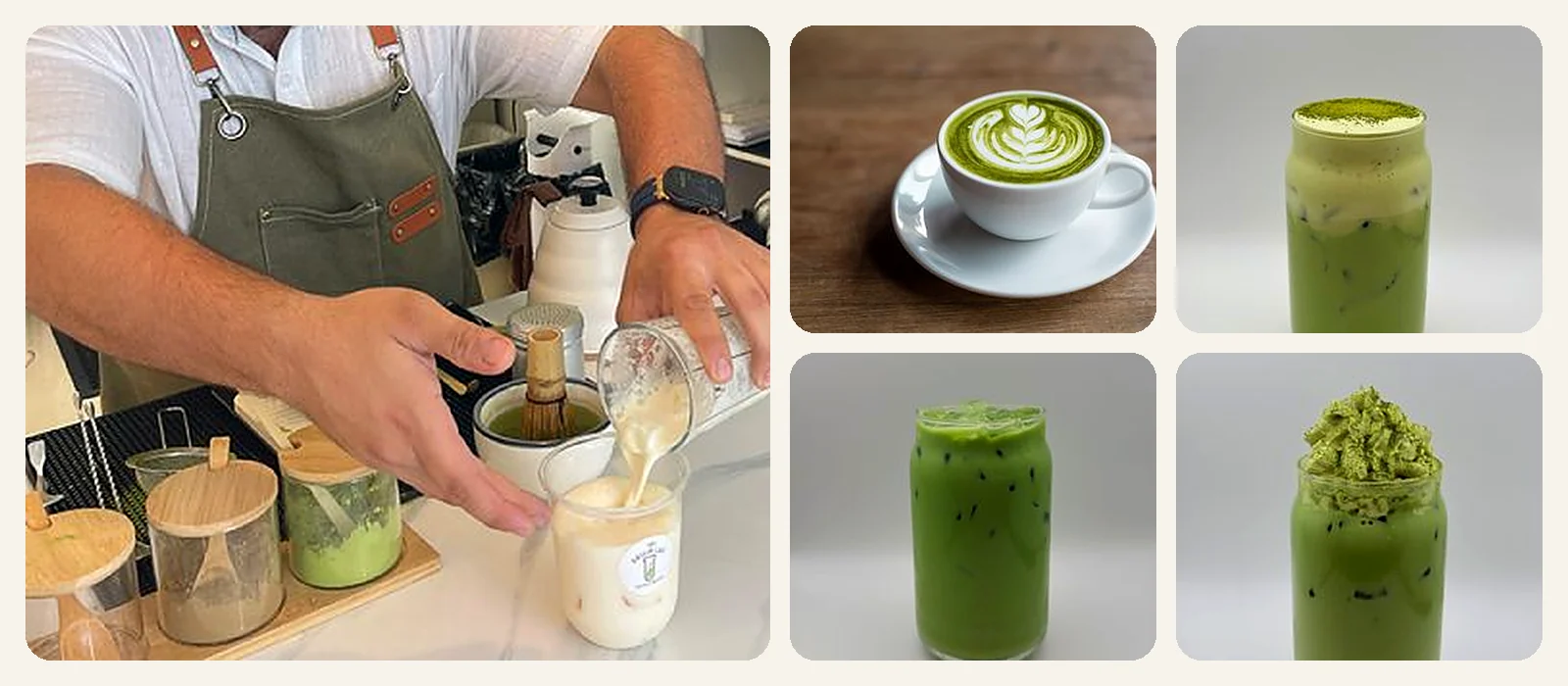
Matcha is a powdered green tea, mostly from Japan. The plants are shaded for two to three weeks before harvest, then the leaves are steamed, dried, sorted and stone-ground. You whisk the powder in, so you drink the whole leaf.
Taste it for yourself, from 6 AM
Origin Lab Coffee & Matcha
211 Sutter St (corner of Kearny), San Francisco, CA 94108
Sun to Thu 6 AM to 8 PM · Fri and Sat 6 AM to 9 PM · (415) 660-7969
What Is Matcha?
Matcha is green tea in powder form. Instead of soaking leaves in hot water and throwing them away, you whisk the powder straight into water or milk and drink all of it. That one difference explains most of what makes matcha special: the deep green color, the rich taste and the extra caffeine.
The meaning of matcha is right in the name. In Japanese, matcha means "tea that has been ground" (Matcha). Cha is tea, and ma refers to rubbing or grinding. Most people in the US say it MAH-chah.
And no, matcha is not coffee. It contains no coffee at all. It comes from the same plant as every green, black and oolong tea, Camellia sinensis. What makes it matcha is how that plant is grown and processed.
What Is Matcha Made Of?
Real matcha has one ingredient: tencha. Tencha is the name for tea leaves that have been shaded, steamed, dried and sorted, but not yet ground (Matcha). Grind tencha into a fine powder, and you have matcha.
So when you see a tin of pure matcha, there should be nothing else in it. No sugar, no milk powder, no color. Two things to watch for:
- Sweetened matcha mixes blend matcha with sugar and sometimes milk powder. They are easy to use, but you taste the sugar more than the tea.
- Cheap baking matcha is sometimes made greener with color additives instead of slow, shaded growing (Matcha). A dull, brownish powder is a sign of older or lower-grade leaves.
How Matcha Is Made, Step by Step
Matcha takes more steps than almost any other tea, which is a big part of why it costs more. Here is the path from tea bush to powder, based on the Japanese labeling standard described on Wikipedia and the process notes of the Japanese tea company Yamamotoyama:
| Step | What happens | Why it matters |
|---|---|---|
| 1. Shade | Tea bushes are covered with reed, straw or cloth for two to three weeks before picking | Less sun makes the leaves greener and keeps more of the amino acids that taste savory |
| 2. Pick | Young, tender leaves are harvested | Soft leaves grind into a smooth powder |
| 3. Steam | The leaves are steamed for about 10 to 20 seconds | Stops the leaves from oxidizing, so they stay green |
| 4. Dry | They are dried flat, without the rolling used for loose-leaf green tea | Keeps the leaf open and easy to grind |
| 5. Sort | Stems and tough bits are removed. What is left is called tencha | Only clean leaf goes into the mill |
| 6. Grind | Stone mills turn the tencha into powder, about 40 to 50 grams an hour per mill | Slow grinding gives a very fine, smooth powder |
The shading step matters most for taste. With less sunlight, the leaves make more chlorophyll, which turns them a deeper green, and keep more theanine, an amino acid that tastes savory (Molecules review, 2021). That savory, brothy note is what tea people call umami.
The grinding step matters most for price. One stone mill grinds only about 40 to 50 grams of matcha an hour (Yamamotoyama). That is a few dozen lattes' worth, after weeks of growing and processing.
Why your matcha settles
Matcha is a powder, not a liquid, so it never fully dissolves. In an iced drink, some of it sinks as the drink sits. Give the cup a swirl before you sip, and the last mouthful will taste like the first.
Where Does Matcha Come From?
Matcha started in China. Powdered tea goes back to the Tang dynasty (618 to 907), and during the Song dynasty people ground tea leaves into a fine powder and whisked it with hot water (Matcha).
The Buddhist monk Eisai brought this way of making tea to Japan around 1191. China later moved on to loose-leaf tea, but Japan kept the whisked powder, and it became the center of the Japanese tea ceremony.
Today most matcha is still made in Japan. The best-known areas include Uji near Kyoto, Nishio in Aichi, and Shizuoka (Matcha). You will often see "Uji matcha" on menus and tins, since Uji has been growing tea for centuries.
Matcha vs Regular Green Tea
Matcha is a green tea, but it does not taste or work like the green tea bags most people know (Green tea). Here are the main differences:
| Matcha | Regular green tea (like sencha) | |
|---|---|---|
| Form | Fine powder | Dried, rolled leaves |
| How you drink it | Whisked into water or milk, then you drink it all | Steeped in hot water, then the leaves are removed |
| Growing | Shaded for weeks before harvest | Usually grown in full sun |
| Color | Bright jade green | Pale yellow-green in the cup |
| Taste | Rich, savory, a little bitter, creamy with milk | Lighter, more grassy or vegetal |
| Caffeine | More per serving, since you drink the whole leaf | Less, since only part of it steeps out |
The short version: with green tea you drink what the leaf gives the water. With matcha, you drink the leaf.
What Does Matcha Taste Like?
Good matcha tastes savory, fresh and a little sweet, with a gentle bitterness at the end. Some people describe it as grassy or like spinach, others as creamy and nutty once milk goes in.
Matcha is not naturally sweet. Many cafes add syrup, which is why some people think matcha tastes like candy. At Origin Lab, nothing is sweetened unless you ask. Agave and vanilla are there if you want them once you have tasted the tea, so you decide how sweet it should be.
Matcha Caffeine and L-Theanine
Healthline puts matcha at 19 to 44 mg of caffeine for every gram of powder. Since a drink can use one gram or several, the total varies a lot from cafe to cafe. For comparison, Healthline puts an 8-ounce cup of coffee at roughly 100 mg.
Harvard's T.H. Chan School of Public Health sums it up simply: matcha has more caffeine than other teas but less than coffee (Harvard T.H. Chan School of Public Health).
Matcha also contains L-theanine, the amino acid that gives it its savory taste. Because the plants are shaded, less of it breaks down before harvest (Molecules review, 2021). Many matcha drinkers say the lift feels calmer than coffee, which is often linked to this mix of caffeine and theanine.
Is Matcha Good for You?
Matcha is one of the richest sources of catechins, a group of polyphenols that includes EGCG, according to a 2021 review in the journal Molecules. Harvard's School of Public Health notes that daily matcha may benefit the brain, heart and gut, but also that more research is needed (Harvard T.H. Chan School of Public Health).
Two honest points:
- The research is still early. The Molecules review says current knowledge covers only some of matcha's effects, and broader human studies are needed.
- Sugar changes the picture. Harvard's advice is to avoid drinking matcha with added sugars. That is one reason we serve ours unsweetened by default.
Enjoy matcha as a good drink, not as a medicine. If you are pregnant, sensitive to caffeine or on medication, ask your doctor how much caffeine is right for you.
Matcha Words You Will See on Menus
Matcha comes with its own vocabulary. These are the terms worth knowing before you order or buy a tin:
| Term | What it means |
|---|---|
| Tencha | The shaded, steamed and dried leaf before it is ground. All real matcha starts as tencha. |
| Usucha | "Thin tea": a little matcha whisked with more water until frothy. The everyday way to drink it. |
| Koicha | "Thick tea": much more matcha and less water, kneaded into a thick paste-like tea. Used in formal tea ceremonies. |
| Ceremonial / culinary | Marketing labels, not official grades. Judge the tea by color, smell and taste instead. |
| Matcha latte | Matcha whisked with a little water, then topped with milk, hot or iced. |
| Sweetened matcha mix | Matcha blended with sugar and sometimes milk powder. Read the ingredients. |
The "ceremonial grade" label deserves a closer look, because it is printed on almost every tin. To check quality by color, smell and taste instead, use the signs in our best matcha in San Francisco guide.
How Cafes Serve Matcha
Traditionally, matcha is whisked with hot water in a bowl using a bamboo whisk called a chasen. In cafes, it usually becomes a latte or something more playful. Here are the main styles, with an example from our menu for each:
| Style | What it is | Try it at Origin Lab |
|---|---|---|
| Hot latte | Matcha with steamed milk and foam | Hot Matcha Latte, $6.50 |
| Iced latte | Matcha and cold milk over ice | Pure Matcha Lab, $7.75 |
| Foam-topped | A latte finished with a thick matcha foam | Velvet Matcha Cloud, $7.95, or Yuzu Air Matcha Cloud, $8.25 |
| Fruit matcha | Matcha layered with fruit | Matcha Strawberry Nimbus, Ube Matcha Nimbus or Mango Matcha Nimbus, $7.95 |
| No milk | Matcha foam over juice, coconut water or sparkling water | Citrus Wave, Coconut Wave or Spark Matcha Cloud, $7.75 |
| Dessert | Soft serve made with matcha | Matcha Soft Serve, $7.95 |
We make ten matcha drinks with ceremonial-grade matcha, from $6.50 to $8.25. If names like Cloud and Nimbus are new to you, our Origin Lab menu explained guide breaks them down. If you like fruit with your tea, read our guide to strawberry matcha in San Francisco.
How to Order Your First Matcha
If you are trying matcha for the first time, keep it simple. Taste the tea on its own first, then add sweetness or flavor once you know what you like.
| If you are | Order | Price |
|---|---|---|
| Brand new to matcha and want to taste it | Pure Matcha Lab, unsweetened, with whole milk | $7.75 |
| Looking for something warm | Hot Matcha Latte | $6.50 |
| Ready for our signature drink | Velvet Matcha Cloud | $7.95 |
| Not sure you like green tea yet | Matcha Strawberry Nimbus | $7.95 |
| Avoiding dairy | Pure Matcha Lab with almond, oat, soy or coconut milk | $8.50 |
| After a stronger tea flavor | Any matcha drink plus an extra serving of matcha | +$2.00 |
A few tips that help:
- Taste before you sweeten. Our drinks come with no added sugar. Ask for agave or vanilla if you want it sweeter.
- Swirl iced drinks. The matcha settles, so stir once before you sip.
- Note the foam. Our cloud foam contains dairy and honey. For a vegan drink, choose plant milk and no cloud.
Origin Lab is at 211 Sutter St, where Union Square meets the Financial District, and opens at 6 AM every day. For walking times from nearby hotels, see matcha near Union Square, and for early mornings, our coffee shop that opens at 6 AM guide.
Your first matcha
Order a Pure Matcha Lab ahead and pick it up at 211 Sutter St.
Frequently Asked Questions
What is matcha made of?
Pure matcha is made of one thing: ground tencha, the shaded, steamed and dried leaves of the tea plant, Camellia sinensis. Nothing else goes in. Sweetened matcha mixes are different and can add sugar or milk powder, so check the label.
Is matcha tea or coffee?
Matcha is tea, not coffee. It comes from the same plant as green and black tea, and it has no coffee in it. The caffeine in matcha comes from the tea leaf itself, which is why matcha still gives you a lift.
Where does matcha come from?
Powdered tea started in China during the Tang dynasty. The monk Eisai brought the whisked style to Japan around 1191, and Japan has made it ever since. Today most matcha comes from Japan, from areas like Uji, Nishio and Shizuoka.
What does the word matcha mean?
In Japanese, matcha means "tea that has been ground". Cha means tea, and ma refers to rubbing or grinding, which describes how the leaves are milled into powder. In English it is usually pronounced MAH-chah, with the stress on the first part.
Is matcha the same as green tea?
Matcha is a type of green tea, but it is made differently. Regular green tea leaves are steeped and thrown away. Matcha leaves are shaded, ground into powder and whisked into the cup, so you drink the whole leaf, not an infusion.
How much caffeine is in matcha?
Healthline puts matcha at 19 to 44 mg of caffeine for every gram of powder, so one drink can differ a lot from the next. Harvard's School of Public Health says matcha has more caffeine than other teas but less than coffee.
Is matcha good for you?
Matcha is rich in polyphenols, including the catechin EGCG, and contains L-theanine. Early research is promising, but reviews say more human studies are needed. Harvard experts suggest skipping added sugar. It is a drink, not a medicine.
What is a matcha latte?
A matcha latte is matcha whisked with a little water, then topped with milk, served hot or iced. At Origin Lab, the Hot Matcha Latte is $6.50 and the iced Pure Matcha Lab is $7.75, both unsweetened unless you ask.
Why does matcha cost more than regular tea?
Matcha takes more work. The plants are shaded, the leaves are steamed, dried and sorted by hand or machine, and a stone mill grinds only about 40 to 50 grams an hour. Strong global demand has also pushed prices up.
What is the best matcha drink for beginners?
Start plain so you taste the tea: a Pure Matcha Lab (iced) or Hot Matcha Latte, unsweetened. If you like it, move on to the Velvet Matcha Cloud. All three are at 211 Sutter St in downtown San Francisco, from 6 AM.
Shaded leaf, slow stone mill, whole leaf in the cup: that is matcha. Come taste it plain first at 211 Sutter St.